
Fixture Leak Detection in San Antonio
Automated plumbing systems are transforming water management in San Antonio homes through predictive leak detection. By utilizing internal pressure sensors and micro-pressure wave analysis, advanced faucets and toilets identify system micro-leaks before structural damage occurs. Licensed technicians install and program these automated fixtures to ensure continuous home water bill protection.
The Westover Hills Pressure Volatility and Traditional Leaks
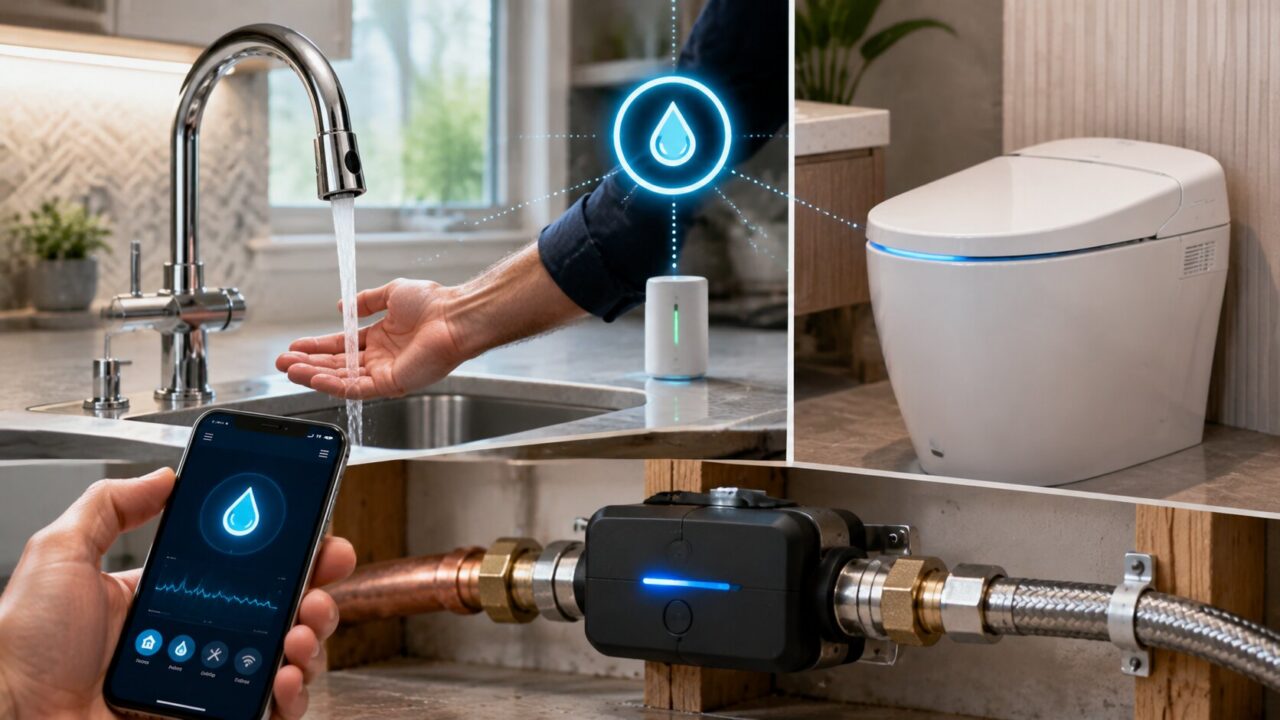
Automated toilets, touchless faucets, and whole-house water monitors help detect abnormal water usage and protect San Antonio homes from unexpected leaks.
If you commute along Highway 151 and stop at the red light on Ellison Drive near SeaWorld San Antonio, you feel the constant vibration of rapid municipal expansion. This environmental vibration places continuous mechanical stress on your home’s water lines. But the primary threat to northwest San Antonio homes is the high-pressure water surges delivered by the San Antonio Water System (SAWS).
During the hot, dry spells of June, static water pressure in northwest Bexar County subdivisions routinely spikes up to 175 psi. While your appliances and fixtures require a safe maximum of 80 psi, failed builder-grade Pressure Reducing Valves (PRVs)—common in developments like Alamo Ranch after eight to ten years—allow these surges to slam into your home. Returning home from the Highway 151 merge onto Loop 1604 West during peak evening hours, you might notice a sudden drop in water pressure as thousands of automatic lawn sprinklers activate simultaneously.
Traditional plumbing systems are completely blind to these pressures. A slow, silent leak in a guest bathroom toilet flapper or a dripping kitchen faucet can easily go undetected for months. Under the sink, a slow weep from a faucet supply line saturates your cabinetry, leading to wood rot, mold growth, and a damp, musty, sour odor. Typically, the first indication is an unexpected increase on the SAWS water meter due to a slow leak.
The Science of Predictive Automated Sensors
The future of residential water protection relies on automated testing embedded directly within modern kitchen and bathroom fixtures. Advanced fixtures like the TOTO Neorest NX2 toilet and Kohler Konnect automated faucets utilize built-in micro-processors, sensors, and electronic solenoid valves to actively monitor water flow, pressure, and temperature.
The mechanical point of failure in a standard toilet is typically the rubber flapper. Over time, San Antonio’s hard water—which averages 15 to 20 grains per gallon of mineral content—precipitates calcium carbonate scale onto the rubber, causing it to warp and allow water to leak silently into the bowl. In an automated toilet, integrated chemical sensors and water level monitors detect this drop instantly. Instead of wasting up to 200 gallons of water per day, the system sends an automatic error code to your phone, alerting you to the failure before you ever notice a change in your utility bill.
For automated faucets, such as the Kohler Graze or Crue touchless models, the internal ceramic disc cartridge operates with sub-micron precision. During installation, if construction debris like copper filings or PVC burrs are not flushed out, they can scratch these highly polished ceramic discs, ruining the watertight seal. In older setups, this causes a steady drip. In automated faucets, an innovative sensor monitors water usage. When the sensor registers a continuous flow above 0.5 GPM for more than three seconds while the valve should be closed, the system recognizes a leak and shuts down the main solenoid valve within five seconds, protecting your kitchen cabinets from water damage.
Acoustic and Ultrasonic Inspection Tooling Precision
Generic plumbing shops often rely on destructive guesswork, cutting holes in your drywall or jackhammering your concrete slab to search for leaks. At Five Star Plumbing, we utilize non-invasive, high-precision inspection tools to isolate failures with absolute certainty.
Our inspection process begins by connecting a digital manometer to your plumbing system. We perform a static and dynamic pressure test to verify whether your home’s PRV is holding pressure at a safe level between 60 and 75 psi. If pressure surges are unchecked, they will continuously damage your new automated fixtures.
Next, we deploy the LeakTronics Pro Complete Kit to run non-invasive acoustic testing. Our high-sensitivity acoustic transducers listen through concrete slabs and tiled walls, detecting the precise frequency of water escaping from a ruptured joint.
Our point of absolute certainty comes when we integrate whole-home water monitors like the Phyn Plus (2nd Gen) or Flo by Moen. The Phyn Plus measures microscopic changes in water pressure 240 times per second, creating a distinct pressure signature for every fixture in your home. During low-use hours, the device performs a daily automated pressure-decay check, shutting off your main water line the millisecond a micro-leak is detected.
Comparing Proactive Automated Fixtures with Traditional Hardware
Homeowners face frequent PRV surges that can silently damage traditional fixtures—automated sensors prevent this. Homeowners can choose between localized point-of-use sensors and whole-house inline shutoff valves.
- The Cheap Way: Relying on traditional mechanical fixtures and cheap, unsealed moisture pucks placed under sinks. These pucks only trigger an alarm after water has already flooded your cabinet floors, and they cannot automatically shut off your water supply.
- The Five Star Way: We complete a full system modernization by installing automated, resin-encapsulated digital valves and inline shutoff systems directly on your main line. These systems use advanced ultrasonic sensing to detect leaks as small as a single drop per minute, automatically shutting off your water supply before any moisture ever touches your floors.
| System Type | Leak Sensitivity | Shutoff Speed | Best Placement |
| Whole-House Inline | Exceptional | Under 5 seconds | Main water inlet |
| Point-of-Leak Puck | Localized only | Under 10 seconds | Under sink basins |
| Mechanical Turbine | Moderate flow | Variable | Main water line |
Preventive Home Water Protection Strategies
To protect your home’s automated plumbing systems and maximize the lifespan of your fixtures:
- PRV Calibration: Ensure your Pressure Reducing Valve is set to hold water pressure below 80 psi to prevent hydraulic surges from tearing your automated valve’s internal solenoid diaphragms.
- Whole-House Softening: Install a demand-initiated water softener to remove calcium and magnesium before they can deposit scale inside your automated toilet’s bidet nozzle or your faucet’s flow sensors.
- Solenoid Cleaning: Schedule a professional inspection every 12 months to flush the fine inlet filter screens of your touchless faucets, preventing mineral scale from clogging the pilot valve.
- GFCI Safety Compliance: Ensure all automated toilets and digital valves are plugged into a dedicated, continuously powered GFCI outlet that meets local San Antonio building codes.
Secure Your San Antonio Automated Home Today
Are you concerned about sudden appliance leaks, erratic water pressure, or how to upgrade your traditional plumbing fixtures? At Five Star Plumbing, we provide the licensed expertise, advanced inspection tools, and premium automated fixtures needed to protect your property. Julian Campos and our certified team specialize in automated toilet installations, touchless faucet calibrations, and whole-house leak detection systems across northwest Bexar County. Reach out to Five Star Plumbing at (210) 673-0797 and at 2780 FM471, Castroville, TX 78009****today to schedule your system inspection and protect your home from sudden water damage!
Frequently Asked Questions
Does an automated toilet automatically detect water leaks?
Yes, premium automated toilets feature built-in self-monitoring sensors that monitor water levels and flapper seals, sending instant alerts to your phone if an internal leak occurs.
Can a touchless faucet work during a power outage?
No, touchless faucets rely on continuous electrical power from batteries or an AC outlet to operate the solenoid valve, though many models feature a manual override dial underneath the sink.
Will a whole-house water monitor prevent a burst pipe?
Yes, advanced inline devices like the Phyn Plus actively track pressure waves and automatically shut off the main water valve within seconds of detecting a catastrophic pipe rupture.
Do I need a professional to install an automated faucet?
Yes, touchless and digital faucets require precise electrical wiring, solenoid box alignment, and integrated filter screens, making professional installation by a licensed plumber essential to protect your warranty.