
Outdoor Faucet Upgrades in Leon Valley
During July service calls in Leon Valley, outdoor faucet failures often increase after extended periods of triple-digit temperatures and direct afternoon sun exposure. Upgrading to heavy-duty brass hose bibs with certified backflow preventers prevents ruptured lines, resists thermal expansion, and lowers bills.
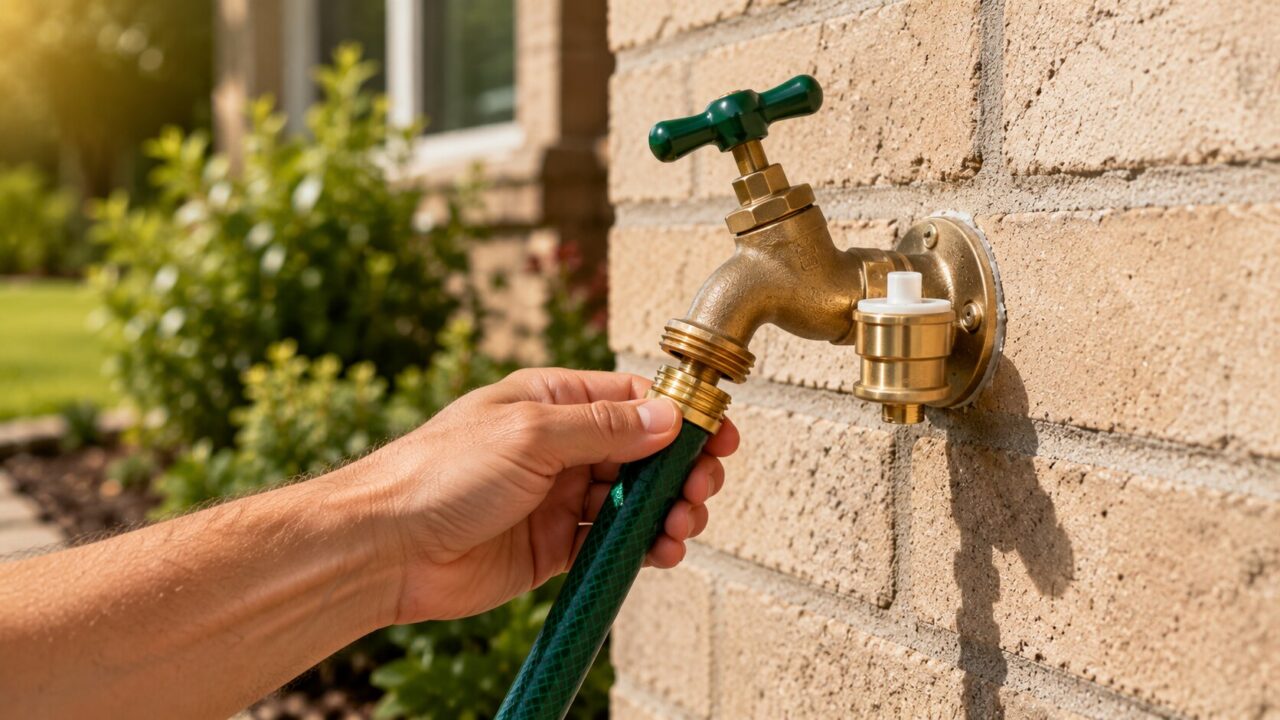
A commercial-grade solid brass outdoor faucet with a certified backflow preventer provides superior durability against Texas summer heat, water hammer, and hard water conditions.
The Evers Road Summer Thermal Trap
If you commute daily along Evers Road, passing Raymond Rimkus Park or driving past Marshall High School on Lobo Lane, you are traveling through a community defined by its proximity to the Medio Creek flood corridors. During a hot July, the sun bakes Leon Valley’s soils, which are a volatile mix of rock and expansive clay.
While this soil movement is a constant threat to under-slab sewer lines, it also creates additional stress on the vertical plumbing lines entering your home. In some properties with expansive clay movement, shifting supply lines can place additional stress on exterior plumbing penetrations and hose bib connections.
In households near Seneca Trails or Trilogy Grove, prolonged sun exposure, hard-water mineral buildup, and seasonal soil movement can accelerate wear on outdoor plumbing components.
The Physics of Thermal Expansion and Solenoid Slam
The primary difference between a brass hose bib and a cheap, builder-grade retail model is its resistance to thermal expansion and water hammer. Many homeowners leave a garden hose or a Wi-Fi timer perpetually connected to their outdoor spigot during the hot July months.
When a hose remains connected, water stays trapped inside the faucet stem and the hose itself. Under direct sunlight, this trapped water absorbs intense solar radiation, heating up significantly. When water is trapped between closed valves, heat can increase internal pressure significantly, especially on systems without adequate pressure control.
When an automated hose timer or irrigation valve closes, it stops this heavy column of moving water instantly—often in milliseconds. Homeowners often notice a sharp bang inside the wall immediately after an irrigation timer closes. That’s a common sign of a water hammer.
You will first notice this failure through very specific physical indicators:
- Dripping and Weeping: Water slowly drips from the atmospheric vent or around the handle stem, indicating that the high thermal pressure has deformed the internal rubber washers.
- The Shattered Check Valve: A sudden water hammer spike fractures the internal plastic float of your required backflow preventer, causing water to spray constantly from the cap.
- Hidden Wall Leaks: In severe cases, elevated pressure or repeated water hammer events may contribute to hidden wall leaks at soldered joints or fittings inside wall cavities, where moisture can damage surrounding materials if left undiscovered.
Drought Penalties and Lifespan Realities
In our service area, plastic hose timers and lower-cost outdoor fixtures commonly show signs of UV degradation, scale buildup, or seal deterioration much sooner than solid brass assemblies.
When they fail, you are forced to deal with more than just the cost of replacement parts.
If a sun-weakened spigot shears or an automated timer sticks open during restricted watering hours, you face immediate water waste penalties and steep Stage 3 or Stage 4 drought surcharges.
During inspections of older homes, I regularly find brass hose bibs that remain serviceable long after nearby plastic components have become brittle or cracked from sun exposure.
Advanced Inspection Tools and Structural Audits
Before recommending replacement, we verify pressure conditions and inspect for leaks to determine whether the fixture itself has failed or if another system issue is contributing to the problem. We take a precise, technical approach to verify the health of your entire system.
When we inspect a home, our first step is connecting a digital manometer to your water system. We run a dynamic pressure test to verify that your home’s main Pressure Reducing Valve (PRV) is operating correctly.
Water pressure can vary significantly across different neighborhoods and supply zones, which is why pressure testing is an important first step during diagnosis.
We also utilize the Sewerin Aqualux AC 100 Acoustic Leak Detector. This acoustic inspection equipment allows us to listen through the concrete slabs and wall cavities of Leon Valley homes.
If pressure testing and acoustic inspection show no evidence of a hidden supply leak, we can focus attention on the outdoor fixture itself and its associated components.
Solid Brass vs Electroplated Zinc Materials Comparison
Material selection plays a major role in how well outdoor plumbing components withstand long-term exposure to heat, sunlight, and hard-water conditions.
| Material | Common Failure Mode | High Pressure Tolerance | Relative Durability |
| Plastic | UV cracking | Under 60 psi | 1 to 2 summer seasons |
| Pot Metal | Corrosion and thread failure | Up to 100 psi | 3 to 5 years |
| Brass | Washer and seal wear | Over 150 psi | 15 to 20 years |
Preventive Strategies for the Local Area
You can take simple, proactive steps to protect your fixtures and lower your overall home maintenance costs:
- Disconnect Hoses After Use: Always disconnect your garden hoses and automated timers from the spigot when not in use. This allows the backflow preventer to drain properly, releasing the thermal expansion pressure before it can rupture the valve.
- Check Your PRV Regularly: High municipal water pressure is a leading cause of faucet leaks. Keep your home’s Pressure Reducing Valve (PRV) set to a safe, stable 50 to 75 psi to protect your appliances and extend the life of your outdoor valves.
- Install an Irrigation Water Hammer Arrestor: If you utilize an automated hose-end sprinkler, consider adding a properly sized water hammer arrestor if repeated valve closures are causing noticeable pressure spikes.
- Annual Backflow Testing: For irrigation and commercial connections, schedule annual backflow prevention assembly testing to ensure your system meets TCEQ and SAWS cross-connection control standards.
Upgrade to Solid Brass and Protect Your Home Today
During inspections in Leon Valley, I see mineral crust and UV cracks forming on cheap plastic spigots within 1–2 years, contributing to water waste and higher utility costs Unchecked thermal expansion can cause backflow preventer blockages, valve blowout, and hidden in-wall leaks, damaging structural framing over time. During outdoor faucet upgrades, we verify pressure conditions, inspect for hidden leaks, and recommend materials based on the property’s exposure to sun, hard water, and irrigation demands. Julian Campos and our professional team specialize in water pressure calibration, whole-house water softeners, and premium solid brass PVD fixture installations. Reach out to Five Star Plumbing at (210) 673-0797 and at 2780 FM471, Castroville, TX 78009 today to schedule your comprehensive under-sink inspection and secure your peace of mind!
Frequently Asked Questions
Does leaving a garden hose connected cause leaks in July?
Yes, leaving a hose attached traps water in the spigot stem, causing rapid thermal expansion and pressure spikes under direct sunlight.
Will high water pressure ruin my outdoor backflow preventer?
Yes. Elevated pressure and repeated water hammer events can accelerate wear and may damage plastic vacuum breaker components over time.
Are brass spigots more durable than plastic ones in the sun?
Yes. Brass is far more resistant to UV-related deterioration than plastic components and generally performs better under prolonged sun exposure.